THE TEST
A sample is assayed
Fineness is measured accurately — on a sample, not on the whole object.

Patented
A hallmark proves a test was done. It does not prove that this object is the one that was tested.
The gap
Fineness is measured accurately — on a sample, not on the whole object.
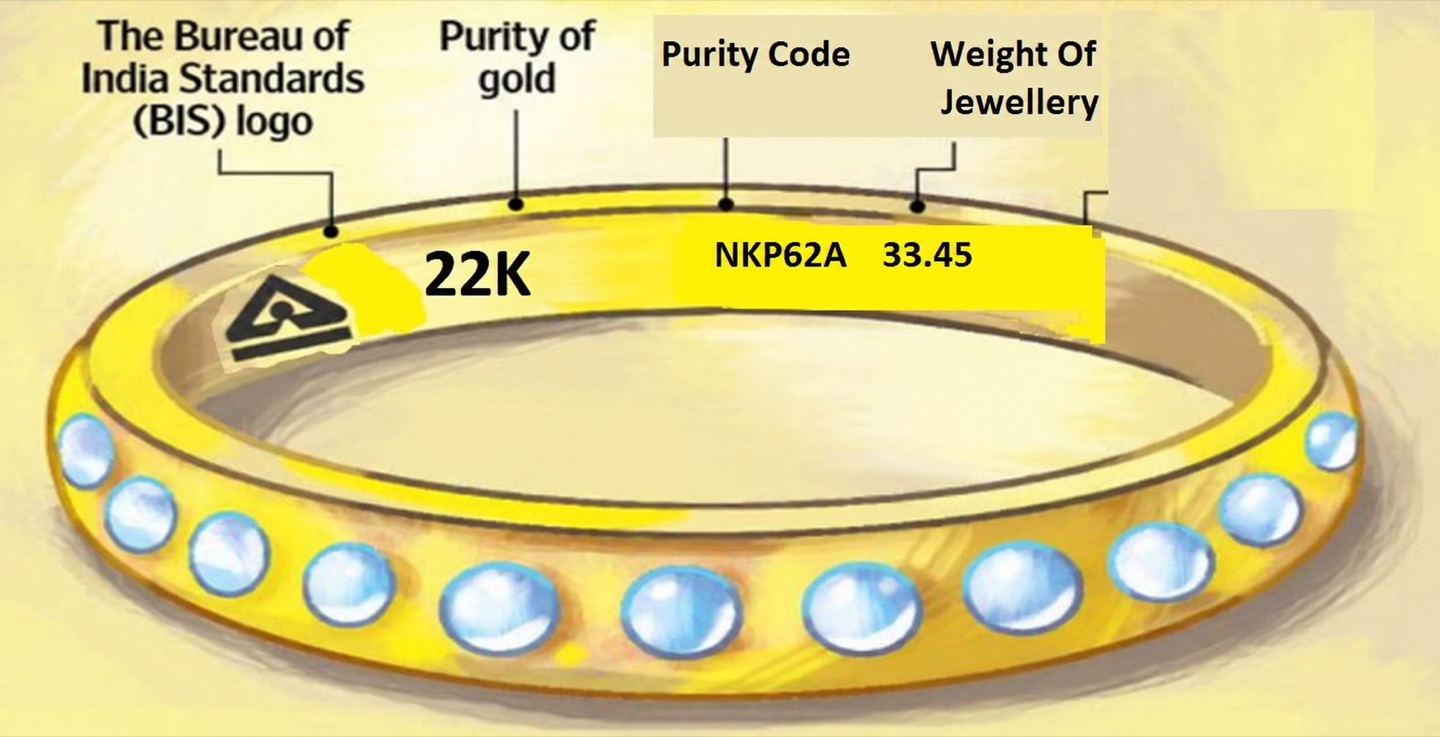
A few characters in a registry. No weight. No image of this article.
At that weight? No retailer, customer, lender or insurer can answer from the mark alone.
Gold is priced by the gram. Exchange, buyback, repair, lending and insurance all turn on proving that the article in hand is the article that was recorded — and all of them face more scrutiny every year.
The system
One record per article — taken from the machines, not typed in afterwards.
Because the code retires at the point of sale, a harvested code reprinted onto a counterfeit is already a dead code.
Auditable back to a measurement, not to someone's data entry.
Photographed at marking, comparable later. Substitution shows up.
Retired on sale — defeats harvest-and-reprint counterfeiting.
A granted patent, not a claim a rival can announce next quarter.
What travels with the article
The code is derived from these — not allocated from a sequence — so it cannot exist without a real measurement behind it.
What it adds
| Statutory hallmarking | This system | |
|---|---|---|
| Assayed to a declared fineness | Yes | Yes |
| Jeweller and centre identified | Yes | Yes |
| Bound to this article's weight | No | Yes |
| Image captured and comparable | No | Yes |
| Drawn straight from the machines | No | Yes |
| Weight before and after assay | No | Yes |
| Retired once the article is sold | No | Yes |
| Checked by the customer's own phone | Partly | Yes |
Compliance stays with the statutory scheme. Proof of the piece becomes yours.
Where it pays
Is this the piece we sold, at that weight? A lookup, not an argument.
Process loss measured at every article, not estimated at month end.
A serial derived from the assay record, verified from a phone.
Trust claims are easy to imitate. A granted patent is not.
Downstream demand
From 1 April 2026, RBI's Lending Against Gold and Silver Collateral Directions require every lender to certify purity, gross and net weight, deductions, defects and an image for each pledge. Those are largely the fields this system already captures at manufacture — though valuation and the lending decision stay entirely the lender's own. Read the RBI directions.
The asset
Machine data in → code and weight marked on the article → verified later from a user's device.
Weight before and after assay. Image captured at marking and compared at verification.
The code is terminated once the article is sold. The claims also define the machines that feed the record.
| Title | A System and a Method of Authenticating Testing of Articles |
|---|---|
| Patentee | Fanfire Solutions LLP |
| Jurisdiction | India |
| “Article” | Not limited to jewellery — gold, silver, bars, coins and other tested articles |
Ownership
Offered for outright assignment — with the architecture, technical documentation and inventor-team transition.
How it runs: mutual NDA → technical discussion → diligence pack with a claim-fit memo against your own workflow → indicative offer. Commercial terms come after technical fit, not before.
If article-level proof would change how your manufacturing, retail or lending operation works, contact us for a confidential discussion of the claims and technical documentation.